
 en
en
 es
es
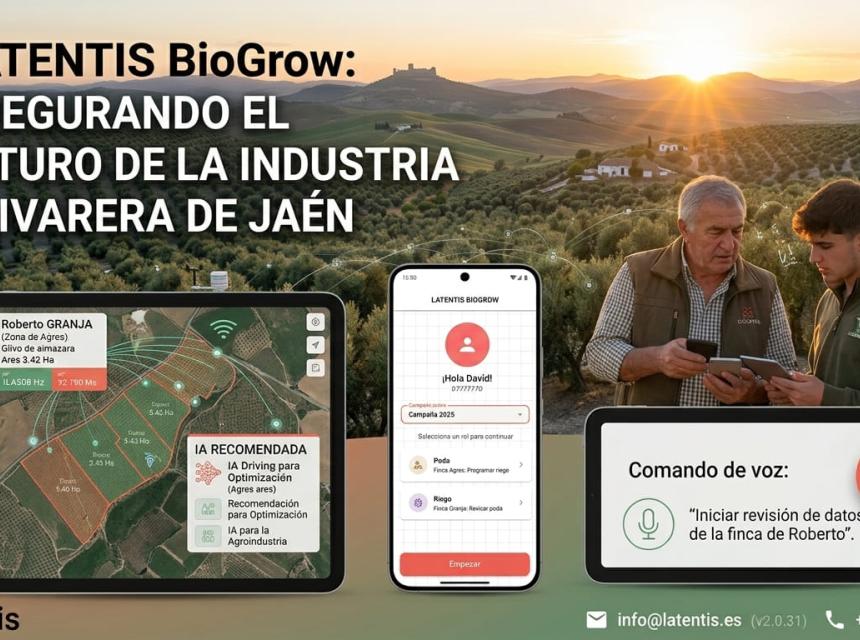
Glosso wins award at the Startup Andalucia Roadshow for Latentis: A Voice and AI System for Farmers
In the Agrotech sector, promises of digital transformation abound, but the reality on the ground is still defined by complex tasks: endless hours adjusting field logbooks, constantly shifting regulations, and a digital divide that often drives farmers away from technology rather than bringing them closer.
Solving the primary sector's core challenge isn't about adding more screens or forms—it's about simplifying daily operations for those who work the land. Built on this exact premise, Latentis (https://latentis.es), an AI platform developed by the team at Glosso, has just been awarded at the Startup Andalucía Roadshow for its practical, field-first approach.
The Core Problem: Administrative Burden and Operational Disconnect
European agriculture faces a triple structural challenge:
- Growing regulatory pressure: Strict compliance with CAP rules, Integrated Pest Management (IPM/GIP), and official registries such as SIEX, REA, or ROPO.
- Lack of generational renewal: An aging workforce requiring intuitive digital tools to attract younger generations.
- Operational disconnect: A lack of real-time communication between the three key players in the chain—farmers, agronomic advisors, and agricultural service applicators.
Until now, digitization has often imposed an extra workload, forcing farmers to spend hours in front of a computer at the end of the day manually logging data. When technology creates friction instead of agility, adoption stalls and supply chain traceability suffers.
The Latentis Solution: Invisible Technology and Real-Time Collaboration
Latentis was built to flip that script. The platform's core mission is to eliminate technology barriers by integrating Artificial Intelligence directly into daily field routines:
- In-Field Voice Dictation: Farmers can log data, treatments, or field incidents using simple voice commands directly from the plot, eliminating manual paperwork.
- Bureaucracy Reduction: Automation and seamless interoperability with official registries reduce administrative workload by up to 30%, ensuring effortless regulatory compliance.
- Collaborative Ecosystem: Connects farmers, agronomists, and applicators in real time—enabling precise diagnostics, 24/7 early warnings for climate or pest risks, and optimized input usage.
- End-to-End "Farm-to-Fork" Traceability: Beyond streamlining daily operations, this automated data collection builds a transparent, unalterable record that allows end consumers to verify crop origin, carbon footprint, and sustainability standards.
What the Startup Andalucía Roadshow Award Validates
Taking top honors in Andalusia’s flagship startup competition is a major milestone—not only for the institutional recognition, but for what it represents: validation that Artificial Intelligence delivers its highest impact when applied to the real, strategic economy.
This award confirms three critical takeaways:
- AI Must Be Accessible: The true value of an AI model lies not in its internal technical complexity, but in how natural and frictionless its interface is for the end user.
- Social Impact Drives Future Profitability: Anchoring populations in rural areas, encouraging young talent to join agriculture, and dignifying farm work are essential pillars for long-term sector viability.
- Reliable Data Creates Commercial Value: Verifiable traceability is not just a regulatory obligation; it is a competitive differentiator that increases the market value of harvested crops.
International Expansion: Scaling Collaborative Smart Agriculture from Southern Europe
The backing of the Startup Andalucía Roadshow marks the launch of an international expansion phase. Latentis will showcase its smart agricultural management model on two of Europe’s premier technology stages: Valencia Digital Summit (VDS) and SLUSH (Helsinki).
Presence at these global forums aims to prove that cutting-edge technology development is not reserved exclusively for urban or financial hubs. Bringing full traceability and collaborative agriculture to major European investors and industry leaders in Valencia and Helsinki validates a clear vision: The future of European food sustainability is built by digitizing the source—providing practical tools that give time and value back to those who cultivate the land.